O trabalho real de um time de crescimento raramente é a campanha em si. É o ciclo em torno dela: a suposição sobre quem vai responder, o teste que a confirma ou descarta, a discussão sobre qual canal gerou a conversão e o orçamento redistribuído na manhã de segunda-feira. A maior parte desse ciclo ainda acontece em planilhas, dashboards e reuniões — de forma lenta e manual.
Cohenta é o motor que a Thyn está construindo para fechar esse ciclo. É uma abordagem à automação de marketing com IA em que o crescimento funciona como um experimento contínuo, operado por agentes sob política em vez de pessoas atualizando relatórios. Cohenta está em estágio inicial — em desenvolvimento ativo, ainda não lançada — portanto, este é um relato do que está sendo construído.
O dashboard não é o sistema
Um dashboard diz o que aconteceu. Ele não decide o que fazer a seguir e nunca age. Assim, o dashboard se torna um lugar onde humanos traduzem números em ações — uma estação de retransmissão manual entre observação e decisão.
A maioria das ferramentas de marketing fica do lado da observação dessa lacuna. Elas reportam, segmentam e visualizam, depois devolvem o julgamento a uma pessoa. A parte lenta nunca foi a geração de gráficos; foi o humano no meio, reconciliando canais e redecidindo investimentos.
A premissa por trás de Cohenta é que o próprio ciclo deve ser o produto. Perceber, decidir e agir pertencem a um único sistema, com pessoas definindo os limites em vez de executar cada etapa. Essa é a diferença entre uma camada de relatórios e uma automação de marketing com IA que realmente avança.
Marketing é um experimento que nunca termina. O trabalho é conduzir o ciclo, não ler o gráfico.
O ciclo Cohenta
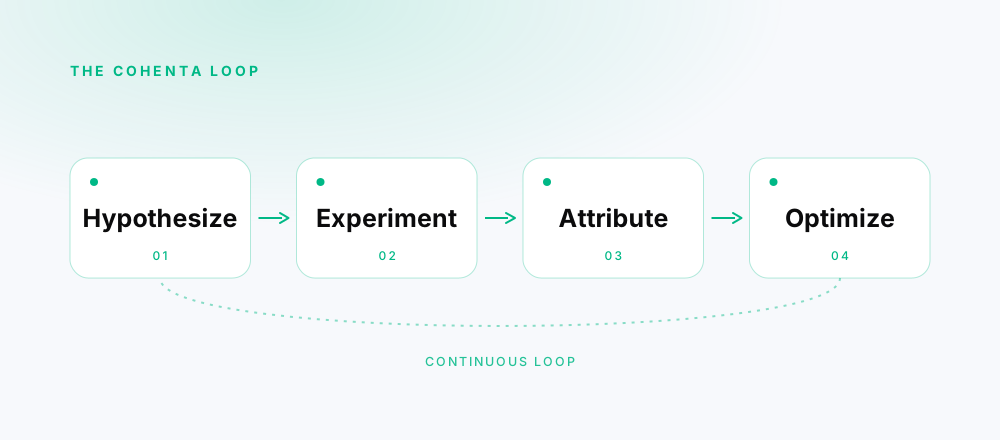
Cohenta é projetada em torno de um único ciclo que se repete continuamente. Cada iteração percorre as mesmas quatro etapas, e cada etapa é um ponto onde um agente realiza o trabalho que um time faria manualmente.
- Formular hipóteses. Enunciar uma afirmação testável — um segmento, uma oferta, uma mensagem, um mix de canais — com a métrica que a confirmaria ou refutaria.
- Experimentar. Lançar o teste como um experimento controlado, com grupos de controle e regras de exposição definidos antecipadamente, não reconstruídos depois.
- Atribuir. Identificar qual interação realmente gerou o sinal, separando os canais que conquistaram uma conversão dos que apenas estavam por perto.
- Otimizar. Direcionar investimento e criativo para o que funcionou, descartar o que não funcionou e alimentar o resultado como a próxima hipótese.
A quarta etapa é a primeira etapa da próxima iteração. Esse fechamento é o ponto central: o sistema não para em uma recomendação — ele age sobre ela, mede a consequência e propõe o próximo movimento. Crescimento autônomo é o que esse ciclo produz quando funciona sem esperar que um humano copie um número de uma aba para outra.
Automação de marketing com IA, conduzida por agentes sob política
O ciclo é executado por agentes de marketing com IA — componentes que são responsáveis por uma etapa, não apenas a narram. Um agente propõe hipóteses a partir de resultados anteriores. Outro configura e lança experimentos. Outro resolve a atribuição. Outro realoca o orçamento dentro dos limites estabelecidos.
O que impede que isso seja imprudente é a política. Política é o limite explícito dentro do qual os agentes operam: gasto diário máximo, marcas e afirmações que jamais podem aparecer, públicos fora dos limites, a evidência mínima exigida antes de qualquer alteração no orçamento ativo. As pessoas escrevem a política; os agentes agem dentro dela.
Essa é a inversão em torno da qual Cohenta é construída. Em vez de uma pessoa decidindo cada ação e uma ferramenta apenas executando comandos, os agentes decidem e executam, enquanto a pessoa define as regras. O humano sobe um nível — de operador a legislador — que é onde seu julgamento realmente se multiplica.
Simulação antes do investimento
Experimentos ao vivo custam dinheiro e atenção reais, e algumas hipóteses não valem ser testadas no mercado. Antes de Cohenta comprometer orçamento, está sendo construída para simular — estimar o intervalo provável de resultados de um experimento proposto e descartar os que falham no papel.
A simulação faz duas coisas. Ela reduz o conjunto de testes ao vivo àqueles que valem a pena, concentrando o investimento onde a incerteza é genuína. E fornece à etapa de otimização uma referência: um modelo de comportamento esperado para comparar com o resultado real, de modo que um resultado surpreendente seja reconhecido como tal.
É isso que separa a automação disciplinada de um sistema que simplesmente queima orçamento mais rápido. Velocidade sem um modelo de custo esperado é apenas uma forma cara de errar. A camada de simulação é a verificação de correção que justifica o direito de agir rapidamente.
Conteúdo como sistema, não como backlog
Experimentos precisam de material — mensagens, variantes, landing pages, o criativo que será testado. Tratar cada um desses como uma tarefa avulsa é como o conteúdo se torna o gargalo que paralisa todo o ciclo.
Cohenta está sendo projetada para tratar conteúdo como um sistema. Variantes são geradas a partir de uma hipótese, governadas pela mesma política que limita o investimento, e produzidas na taxa em que o ciclo de experimentos as consome. Inteligência de conteúdo aqui significa que o ciclo é alimentado continuamente, e que o que é produzido é moldado pelo que a etapa de atribuição já aprendeu que funciona.
O objetivo não é mais conteúdo. É conteúdo que fecha mais rápido — gerado para testar uma afirmação específica, medido com honestidade e substituído no momento em que uma variante melhor é comprovada.
Para onde isso está indo
Cohenta ainda está sendo construída, e essa ordem é deliberada: o ciclo, a política, a simulação e a atribuição precisam ser confiáveis antes que qualquer parte deles toque um orçamento ativo. Os primeiros marcos são sobre tornar cada etapa honesta de forma isolada, depois deixar o ciclo funcionar de ponta a ponta sob política restrita. Com o tempo, a mesma estrutura deve suportar mais canais, experimentos mais ricos e ciclos mais curtos — o ciclo permanecendo constante enquanto suas iterações ficam mais rápidas.
A aposta é simples. Entre a próxima geração de ferramentas de automação de marketing com IA, as que importarão não serão dashboards melhores. Serão sistemas que conduzem o experimento por você, sob regras que você define, e mostram seu trabalho. Cohenta é a tentativa da Thyn de construir um.